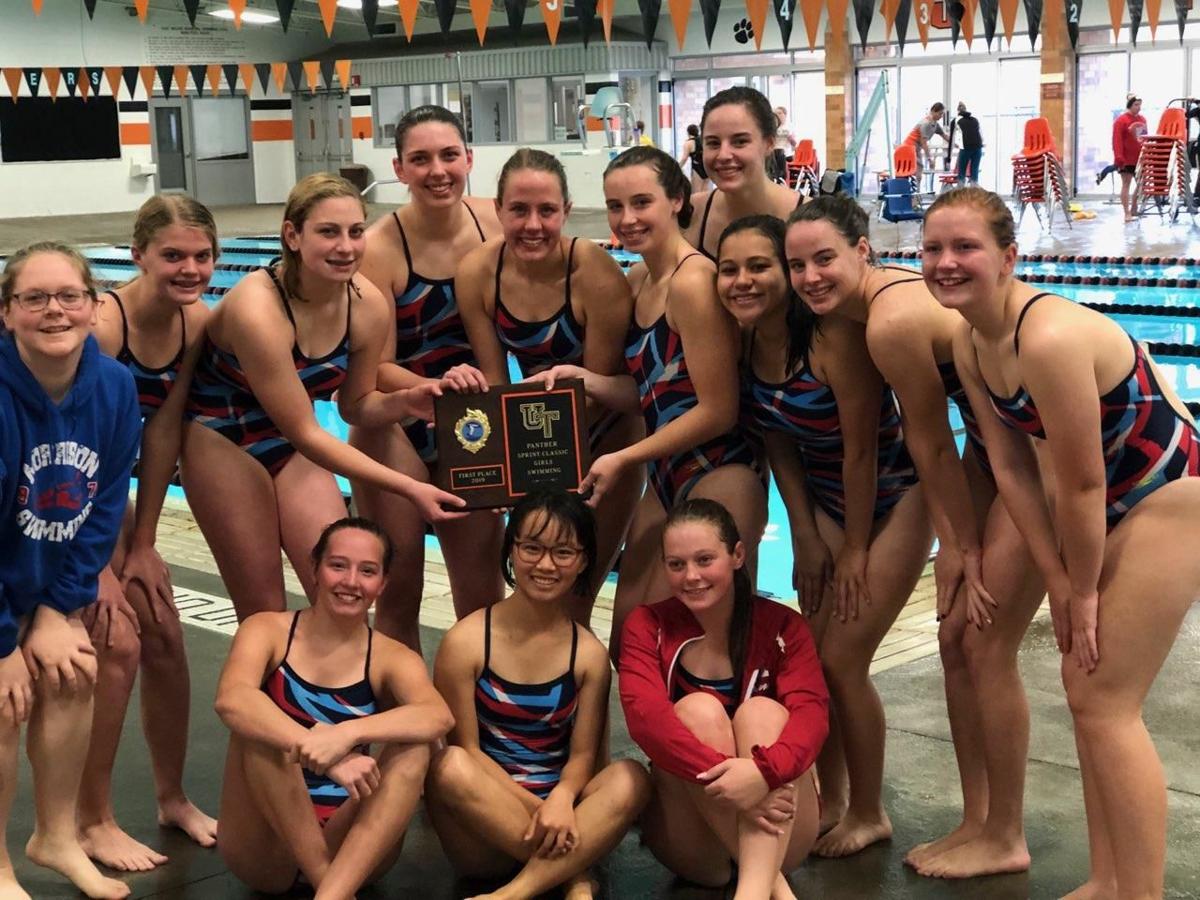
Friday, March 27, 2020

20 A People to Guide me

1) One person must be a domain expert in your industry.
2) One person must be an expert on your market.
3) One person must be an important supplier to your industry.
What constitutes 'contact'?
Finally: Reflect.
Ben Lee
1) Who they are and what their background is. 
Ben Lee. Elite Swim Coach, Assistant Coach with professional swimming, International Swim League, North Carolina Zones Coach, All Star Qualifying coach, a father to two young boys. 
2) Which 'slot' you are filling with each person (i.e., domain expert, market expert, supplier), and how the person fills the spot.
Ben will fulfill the Market Expert due to his knowledge of working with Olympians, working with elite age group members, and connections to professionals in the same field.
3) A description of how you found the person and contacted the person.
I first found Ben while coaching during Souther Zones Championships, which then later progressed into our friendship blooming over our passion of coaching and being servants for our sport. We exchanged numbers during this time.
4) The nature of the exchange you have with the person -- what favor did they do for you? What is the return expectation? 
We trade ideas, and when needed reach out for advice on professional and personal decisions. Considering the age difference and experience we both have, we call each other whenever needed to find what we should do.
5) How will including this person in your network enhance your ability to exploit an opportunity?
We share the same passions. We’ve both explored this sport to the extreme with the same end goals. Going to him, with his guidance, could make or break this idea.

Eric Christensen
1) Who they are and what their background is.
Friend, previous co-coach, Current Master’s Swimming World Record holder in multiple swimming events, previous Florida Gator Athlete, Age Group National Ranked Head coach.
2) Which 'slot' you are filling with each person (i.e., domain expert, market expert, supplier), and how the person fills the spot.
Domain Expert. His current perspective of the sport is more influential because he is still an active participating athlete whom is categorized as an elite swimmer due to his world records.
3) A description of how you found the person and contacted the person.
He’s my best friend. There’s a SOLID 17 year age gap, but he’s my best friend. We worked alongside each other every single day for 3 years. Even with my move, we talk just as much. I was first introduced to him when I started my first Florida club coaching job, and together we became nationally ranked coaches.
4) The nature of the exchange you have with the person -- what favor did they do for you? What is the return expectation? 
As friends, just communication. We’ve exchanged respect. Granted, if ever the opportunity for a club to start in Florida, he would ask to be a lead in the staff, which I would give in a heart beat. His raw talent for this sport says one thing, but his raw talent and leadership skills is someone I would hire before I could blink.

5) How will including this person in your network enhance your ability to exploit an opportunity?
He challenges my ideas, theories, perspectives while also providing me an athlete’s perspective and reasoning. DRASTICALLY. His perspectives could alter the entire perspective of a club and programming.
Charlie Rose
1) Who they are and what their background is.
Florida Coach of the year, previous employer, Nationally ranked coach, Head Coach of Blue Dolfins in Oviedo, FL, which is top 10 nationally ranked club team, behind Bolles of Jacksonville, FL.
2) Which 'slot' you are filling with each person (i.e., domain expert, market expert, supplier), and how the person fills the spot.
Supplier, but for things such as accounting guidance, USA swimming configuration guidance. The know-how when proposing to the Mayor of the city.
3) A description of how you found the person and contacted the person.
Previous Employer. 
4) The nature of the exchange you have with the person -- what favor did they do for you? What is the return expectation? 
Close ties with the team and athletes in future endeavors, payment of services, etc.
5) How will including this person in your network enhance your ability to exploit an opportunity?
Proper guidance from an already successful team would allow me to bypass beginner mistakes that could lead to the destruction of my original club idea.

My Reflection:

By using these people, and allowing their support and guidance to help during the creation of this club, I will be able to bypass beginner mistakes, while receiving more knowledge of clubs and how they are ran.


Idea Napkins Pt 2 19A

So my only feedback response was all compliments and encouragement to my original post. Reviewing this myself, as well as challenging myself to be better, I will be changing what I think I could've done better. The changes will be in BOLD.  

1) You. Who you are. What your talents are. What your skills and experiences are. Also: what are your aspirations? Specifically regarding your business concept, how do you see this business (if you were to start it) playing a role in your life?

I am currently the University of North Florida’s assistant swim coach. I have been coaching for 11 years this year, working with multiple age groups between 10 to 24 years old. Currently, I am hoping to advance in my coaching career into the Big 10, SECs, ACC conferences. My ultimate goal would be to start up a club team chain in multiple states to engage a more family like community in our already close-knit swim culture. Starting this new swim opportunity would allow me to make differences in multiple athlete’s lives and act as a mentor. I believe that there is a great fulfillment in life making a difference in our younger generation. Things I'm finding revealing in this time of need during COVID-19 is the family aspect. I'm learning that there needs to be a higher education level of the ever changing technology and communication between coaches, parents and athletes.

2) What are you offering to customers? Describe the product or service (in other words, how you'll solve customers' unmet needs).
I am offering an elite swim program that would allow the traveling distance between two already successful clubs to be cut in half. By providing this opportunity to athletes, we will be offering an advanced program that will cater directly to these athlete’s need by the use of video playback, infinity pool video feedback, 1 to 15 coaching ratio, as well and multiple meet opportunities to observe how athletes perform under pressure. I am more than willing to extend past that number as long as I am incorporating more coaching staff to fulfill these extra duties. Various locations could be introduced in smaller numbers, but would be challenging those of swim schools, which we are trying to avoid. We are hoping to add to the swim community, not deteriorate other programs.

3) Who are you offering it to? Describe, in as much detail as possible, the demographic and psychographic characteristics of your customers. Think especially of this question: what do your customers all have in common?
This product will be offered to the ages 10 to 18, with the option for private group lessons up to the age of 25. We are reaching out to parents within any class, but primarily middle ad upper class whom have children between these ages. These customers will all have sport specific persons under their umbrella who are either wanting to cut down travel times, wanting to have a smaller coach to athlete ratio, or wanting an elite performance coach to observe and correct technique. In addition to these pros of a swim club, we will also be incorporating an online and printable dryland performance for the option to allow swimmers to feel as if they aren't missing a workout, even if not able to get into the pool. Individualized workout plans will be given to those 14 and above.

4) Why do they care? Your solution is only valuable insofar as customers believe its valuable to them. Here, explain why customers will actually pay you money to use your product or service.
Those who will be impacted and find this program valuable are those who are aware of the limited options. The customers will be given the option for shorter travel time, which is the ultimate advantage we must draw people in. The next major advantage is the position of elite staff to bring a higher level of training to various ages. Those invested in the sport will see the purpose of these upgrades to the program. They will be given a very specific difference from other clubs and allowed more of an impacting voice than other clubs. 

5) What are your core competencies? What sets you apart from everyone else? Also: what do you have that nobody else has?
Our location is a primary focus. By being between the two clubs which are 45 minutes away from each other, we will be able to offer services to those closer to Davidson College. Our second advantage will be the Elite staff members. We will have myself, a double digit coach who has coached at the Division I championship level, as well as being previous champions for Southern Zones, All-Stars, Florida Senior Champs, having multiple Olympic trial qualifiers, and multiple athletes that are spread throughout the SEC, ACC, and other conferences. Alongside me will be an elite coach whom is currently working alongside 50+ Olympians, who has coached multiple gold, silver and bronze medal Olympians, whom holds all the same titles as myself for his location in North Carolina, as well as his current achievements with LA Current, the International Professional Swimming League. (I stand by my core competencies. I don't know if I could incorporate more that would show. Give me feedback please! What would you want to see?)

Friday, March 20, 2020

18 My avatar... ish

This is going to be frustrating but the point of my business is to be all inclusive. Race, Gender, Religion should not play a part in our decision of who can join the team and pay the team dues.


Our restrictions are limited to participation limits by numbers and income more than anything. Ultimately due to the monthly fees we would be looking more geared towards a middle to upper income family.
The participants themselves would be athletes that are in shape physically to meet our speed and time standards. By in shape, we are looking for well to moderately toned athletes, as excess body weight will ultimately slow any participants down. We would require that a previous time standard be met before allowing them on the team, to bypass any physical standards, times can be met. The participants are going to be students ranging ages 10 to 22. Past college level would require private sessions to maintain that familiar feeling and common interest of the athletes currently on the team. The participants' hobbies would be swimming, more likely than not another sport that works alongside with the practice times. Most participants will play water polo, basketball, lacrosse or another sport with strict disciplines up until high school level. Once at that level most sports become difficult to choose between two due to time restraints.


The family we would be looking at would range anywhere from a single parent to a full family. Although we are open to large families, it’s become common that the most a single family will have, children wise, would be two or three while being able to meet each child’s need for their sport.


In my head when I picture my ideal customer, I see a mom, a dad, because paying close to $300 a month for a single child to participate would be easier with two incomes, not one. And then I see two to three kids. Four years apart so the family has time between children to save up for college and pass down one car to the next child when the time comes. I imagine both children playing two sports outside of swimming, one that is completely devoted to the water and playing water polo, while the other is more of a rebel and chooses a ground sport/activity like band or lacrosse. Maybe even video games? I imagine ages 11 and 15 for the children, with parents in their mid to late thirties, even early forties. The mom loves being a team mom and is active as much as possible with the kids, and the dad takes on the supportive coaching-on-the-side dad. Of course the coach and the dad butt heads sometimes when the parent crosses the line, but only because they want their child to succeed, so as a coach we understand. 

It’s hard to picture someone because I see a huge array of skin tones, height, and backgrounds. Water doesn’t discriminate. I’d be lying if I said this assignment didn’t frustrate me, because I can’t see outside of the family love and perspective. That’s really the main focus, because if there isn’t an incredible love and relationship with their child, they wouldn’t pour so much time and money into a sport like swimming that requires close to 26 hours a week at an elite level. Image result for high school swimmers and their familiesImage result for high school swimmers and their familiesImage result for high school swimmers and their families

What I have in common with these people are the love for the sport. It's seriously as simple as that. You're in it because you love it and hate it at the same time. I've been exactly where they are. I've been in the water working out so much that I lost track of time. I've been on the elite team that had to cough up outrageous sums of money in order to compete and somehow my family has made that happen for me. Do I think it's a coincidence? Maybe? In the sense that running into the same person at the coffee shop every morning is a coincidence. People who love the same things run into each other more and more over time. The love for the sport doesn't come for the faint of heart. A lot of people quit at an early age, 8-10, which is why the program would start around 10-11 year old children. Sport brings out a passion in people they don't typically have in otherworldly activities. Who knows. Sports can really change people's perspectives, especially earlier in life. I think it'll be a coincidence if I run into these people ten years down the road. Time will only tell.

Friday, March 13, 2020

15 A


Demographics
1) Find three people who would fit that segment and arrange to interview them. Just like last time, these interviews, if conducted properly, should take about 10-15 minutes. Any less, and you won't be able to obtain adequate information. These three people may NOT be the same people you interviewed last time. 
Single mom: Middle Class with 14 year old daughter - The highlight of your club is the location, for us to be driving over 40 minutes to allow her to practice for two hours, we are running out of time in the day, or I’m running out people to ask for help to get her to and from practice. She’s only 14, so I want her to still do what she wants and have fun, but I also want her to succeed in school, and driving that long is starting to cut into homework time.
Upper Income Dad: 9 year old son - Currently we are looking to help him grow with the right club, and although the prices for an elite team are more than we’ve spent on a program, starting him young in something he’s passionate about and good at is a great idea to me. With him being in elementary, this is the prime time to discover what he likes and what he doesn’t like. We will experiment later, so having an option to do a month by month payment would be ideal.
Freshman in college: 19 year old - I’d love to join an elite program during the summer, but I’m hoping for a scholarship or something. I can’t afford to pay over $300 a month just for training when other clubs will let me train for that much for the entire summer. My mom and dad will help me if I really prove that I need the training, but I have to pay out of pocket for something like this more likely, especially because there are cheaper options. They just won’t get why I want to train under certain coaches.
3) Begin with alternative evaluation. In the last case exercise, you determined how customers sought information related to solving their need. The outcome of this step is to produce a set of alternatives. Customers pick from among this set of alternatives. In this step, your job is to figure out how they do their picking. Does price matter the most? Does quality? Does style? Is there more than one factor that is important to your customer segment?
The determination of using our club for competition need basis is based on the amount of athletes, the performance of these athletes, the performance outcome abilities of the coaches, and the location. Price plays a part in the lower income family, but generally for middle and upper class income families, the price are around the same for other common elite programs.
4) How/where do they buy? Elements of the actual transaction can help characterize your segment. Is your segment more likely to buy online or in a store? Are they more likely to use cash or will they finance the purchase? Etc. If this is a B2B purchase, who's involved in the purchase decision? 
My actual transition is hands on, in person only. Swim lessons videos can be an option for online, but this product is strictly in person. More than likely parents will sign up with an automatic billing, as USA swimming requires a form of automatic billing and we would be partnering with them for our organization. The purchasers, dependent on family, will be strictly to the parents with the opinion of their children. 
5) Post-purchase evaluation. What matters most to your customers when they think back on the 'rightness' of the purchase? What helps them determine the purchase was a good idea? What sorts of things make them think a purchase was a bad idea? 
Ultimately, it’s something of the “right” experience. If the customer is unsatisfied with the performance levels from the coaches or the athletes recruited into the program, then we aren’t offering the product of being “elite” to them. Our performance is what is judged as what is worth the purchase or not. Granted we should offer something like a trial week to see if the athlete’s are comfortable and receiving what they are hoping to obtain. 
6) Report the findings. Simply summarize your interviews. 
Location and price seem to still be the stand-alone concerns with starting a new club. I, honestly, thought that the status of being “elite” would be the scarier subject, but money always seems to shine through. 
7) Draw conclusions. Based on what you know about this segment and what you learned in your interviews, how would you succinctly describe this segment in terms of alternative evaluation, purchase decision, and post-purchase evaluation? 

The highlight of the interviews was money concerns, so offering a trial period to allow athletes and parents alike to become comfortable with the program is more than likely the next big move to make. Next would be deal packages. Monthly, Seasonal, Summer only, and school year only option can be made available to those who may be in current financial struggles. Also, initiating a scholarship opportunity plan should be something in the works as well. Post-purchase is something that can’t really be applied in full to a subscription and performance based purchase.

16 A

1) Describe five ways in which you think you have human capital that is truly unique. What is it about you, exactly, that makes you different? Write this up in a detailed list. 
Oh Lord, this is going to sound conceited.
  1. I’m quirky - I’m a naturally awkward person. Conversations and open communication don’t come easily to me so it’s something that people typically pick up on quickly. One of the coping mechanisms I’ve trained myself to do is laugh and make jokes. Typically this drives people to believe I’m a naturally happy person (I’m not, I’m the queen of pessimism) and draws them in where later they typically find out that I’ve got a darker mind that most. But, due to my weird coping mechanism, I make jokes and people then enjoy this weird dark quirky energy.
  2. I’m loyal - I was raised in the country where you trust first, ask questions later. It’s bitten me in the butt more times than I care to admit, but for the successful times, it’s paid off. I don’t rat people out, I’ll blindly follow direction, I’ll make big leaps as long as I’m following someone I trust, I won’t leave unless being forced to, more than likely. Unfortunately, that’s my downfall as well. I don’t know when to walk away. The blind loyalty can cost me in the long run when better opportunities come along.
  3. I’m passionate - I feel everything DEEPLY. Excitement, joy, happines. But, I also feel things like anger, and betrayal more than I should. Things become personal, such as work, when I should be able to walk away. If I believe something is wrong, or needs to be corrected I will fight for it until it’s fixed. I have this unnerving drive that pushes me through an abnormal amount of stressful situations. If I believe it, I’ll fight for it.
  4. I’m Understanding - I’ve matured enough to know when I’m wrong. I’ve come to learn that life doesn’t give you the best options at the right time through life experiences. Trial and error has taught me a lot of the life lessons I wish I could’ve learned at a slower pace, but this is where the passionate and aggressive traits come in.
  5. I’m aggressive - My biggest downfall, depending on perspective. I believe in holding people accountable for their actions, and lack thereof. I have athletes that’ll complain life isn’t fair when they haven’t achieved their goals, but I’ll be the first to remind them if they didn’t work for it, they don’t deserve those goals to be met. I hold nothing back when it comes to correction and realistic explanations. People expect me to have a maternal position towards athletes, and I simply don’t.
2) Interview the five people who know you the best. Ask them what they think makes you different -- remember, focus on your knowledge, skills, abilities, emotions -- in other words, your human capital. Try to stay away from discussing your other types of capital (such as who you know). Record each interview. In your post, please post each interview, as well as a two-three sentence summary of each interview, explaining what your key takeaways are. There is no time limit on these recordings. As long as you cover the information asked for above, that's all you need to do. (Audio recordings are fine. You'll need to use a platform like Soundcloud to host your files.)
Alexander (Fiance) - The biggest stand out for me is your drive and your self- determination to succeed. Motivation to leave an impression on others. To me, especially in the world you live in, your determination to help others achieve their goals that they want, that have nothing to do with you. Other people’s want for success is what drives you. You’re selfless.
Madie (Best Friend #1) - Your energy levels are crazy. You are a literal pogo-stick when it comes to working with people and talking to people. When we first met you were overwhelming, but you also warned me that if that was the case to tell you. So I did and you and I became friends. I saw how much you loved people and that’s what made you “overwhelming” because I’ve never met someone who loves interaction quite like you.
Rachel (Best Friend #2) - You’re a B*tch when you need to be, and that’s something everyone needs in their life. Someone to tell you how it really is without holding back. I hated your guts when we first met because you were so adamant on telling me what I was doing wrong (She was dating a horrid guy) only to find out that it was because you didn’t want to see me get hurt, which I still did. 
Annie (Best Friend #3) - Have you HEARD you. You are ungodly passionate and supportive. When my husband wanted to join the military but couldn’t pass the swim test you worked HOURS with him to help him pass. We offered you food, beer, whatever you wanted and all you asked that you were the first to know if he passed. You didn’t care about anything but him doing what he wanted. That’s one of the reasons we love you so much, because you love without conditions.
Judy (mama bear) - You don’t give yourself credit for how much you care about other people being happy. I think that’s why you’re negative in your own life, because you make everyone else focus on the best outcomes in their life. You are optimistic around people, but pessimistic towards your own ideals and goals. You’re loving and outgoing, but only in the aspects you want to be. You’re single-minded on certain subjects and no one can change your mind about things like swim, or work things.
3) Reflect on the differences. How do you see yourself, and how do others see you? Are there differences in how you assess yourself compared to others? What do you think causes these differences? Do you think your interviewees are correct about you? Finally, going back to your list from part 1, would you make any corrections to the list? How? 

I see myself as someone who isn’t all that outgoing, but apparently I’m the opposite in everyone else’s perspective. I think I judge myself a little harsher than everyone else seems to in prolonged terms. Initially, my friends see the aspects of myself that I see all the time. I think there is truth in all there statements and I can understand where they are coming from. Aside from the perspective of being pessimistic, I don’t think I would change anything from my initial list only because everything was pretty similar to their opinions.